Logistics gets expensive when it slows down. Freight that sits creates cost without value, especially when demand spikes or an inbound truck misses its delivery window by two hours and throws off a full day of labor planning. Cross docking is a practical antidote to this drag. Done right, it turns parking-lot chaos into a smooth handoff, letting shippers and carriers convert variability into flow. If you have ever stared at a yard full of trailers and wished for two more docks and twenty more hands just for the week, you already understand the appeal of a cross dock warehouse near me.
Cross docking is not new. What has changed is the cadence of retail and industrial demand, the unpredictability of transportation timing, and the pressure to hold less safety stock. That combination makes surge capacity a competitive advantage. You do not always need a new building or a full contract with a 3PL. Often you need a cross dock facility that is reliable, reachable, and able to scale up quickly for a day, a week, or a season.
What cross docking actually solves
People use the phrase cross docking to mean different things. In its pure form, inbound pallets or cases move directly from receiving to outbound with minimal or no storage. The benefit, in simple terms, is cycle time. In practice, cross docking covers several use cases.
The most common scenario is a transfer from a line-haul to a final-mile carrier. A truck arrives with mixed freight destined for multiple consignees in the same metro. The cross dock team breaks the load, verifies counts, applies local delivery labels, and reloads into zone-based routes. The inventory never hits a rack position. The dwell time might be 45 minutes.
A second scenario involves consolidation. Multiple small shipments scheduled for the same outbound route arrive separately. The cross dock holds them on the floor for a short buffer, then builds a full trailer to hit weight and cube targets that make the move economical. You save on LTL minimums and reduce touches.
A third scenario is damage control. A receiver refuses a portion of a load due to pallet collapse or temperature excursion at the perimeter. Rather than push the problem back to the origin, a cross dock facility can restack, rewrap, or rework packaging to bring the product back to a shippable state. In perishable categories, an hour matters. Even in dry goods, salvaging 90 percent of a compromised skid can save a claim and a customer relationship.
There are other variants. Pre-kitting for promotions, postponement labeling, hazmat segregation, will-call pickups for job sites that do not have dock access. The common threads are short dwell, high visibility, and precise coordination across carriers.
Surge capacity, not permanent overhead
Fixed capacity feels safe until it goes idle. Variable capacity feels risky until it saves you from a costly miss. Cross docking turns capacity into a service you can dial up or down. On a Tuesday in March, you might need two doors and a four-person crew for three hours. During peak season, you could need twenty doors, extended hours, and yard space for drop trailers. Paying for that infrastructure twelve months a year rarely pencils out. Accessing it on demand does.
Surge capacity comes in two flavors. Planned peaks, such as back-to-school, holiday, or end-of-quarter project rollouts, can be forecasted and booked. Unplanned spikes, like a port delay that causes three containers to arrive on the same day, need same-day or next-day solutions. For both, a cross dock warehouse near me is less about the cheapest rate per pallet and more about reliability, throughput, and communication. If a facility can say yes to volume within a defined SLA, and you trust their counts, they are worth more than a lower quote that fails when the board lights up red.
What “near me” really means in logistics terms
Proximity is not just miles. It is minutes, traffic patterns, and carrier lanes. A cross dock warehouse near me could mean within 10 to 15 miles of your customer base if final mile speed is the goal. If line-haul timing matters more, near me may mean adjacent to a major interstate junction, a rail ramp, or the airport cargo area to capture late arrivals that need fast turns.
Time of day changes the calculus. A facility that is 12 miles away but on the wrong side of a river crossing at 4 p.m. can be farther, practically, than one 20 miles away with direct highway access and predictable transit. It is worth mapping drive times by hour, not just distance. Ask for typical turn times at different windows, for example pre-8 a.m. receiving, midday rush, and late arrivals. If your carriers run team drivers and land at 2 a.m., you want a dock that is staffed to receive and rework in that window, not one that opens at 7.
Anatomy of a good cross dock facility
Not all warehouses that offer cross docking are built for it. The layouts and workflows that support storage and order picking do not automatically make good cross docks. You can tell quickly if a building is designed for flow. Look for dock density, straight-through staging lanes, and staging depth that allows a fast turn without double handling. A real cross dock facility will have:
- Sufficient doors and apron space to allow simultaneous inbound and outbound work without bottlenecks at the dock face. Short travel paths from receiving to staging, with marked lanes by route or zone to prevent intermingling. A WMS or scanning process that captures piece counts and damage photos at break-bulk, not just at outbound. Safety controls around forklifts, pedestrian walkways, and clear stacking height rules to keep “temporary” staging from becoming a hazard. Flexible labor scheduling that expands crews during peaks without pulling untrained staff onto powered equipment.
These details matter when a truck is waiting on the apron and your appointment window is closing at the consignee. The difference between a 20-minute unload and a 90-minute unload is not brute force. It is layout, process, and communication.
When San Antonio is your pivot point
San Antonio sits at a useful crossroads. It connects I-35, I-10, and proximity to the border crossings that feed nearshoring flows from Mexico. If your freight moves between the Midwest and the Gulf or originates from maquiladora production, a cross dock warehouse San Antonio TX can shave a day off cycles by rebalancing loads before the final push into Texas metros or out to the coasts. For inbound containers that land at Houston or Laredo and need rework, a cross dock facility San Antonio TX can receive late, fix issues, and get product back on the road before dawn. The city’s distribution footprint is large enough to offer competition yet concentrated enough that you can cover the metro within a tight delivery window.
Shippers using cross docking services San Antonio have another lever, bilingual crews familiar with southbound and northbound documentation. Border paperwork issues are a common friction point. A team that catches an incomplete carton count or mismatched PO at the cross dock can prevent a border hold or a refused delivery downstream. That kind of local expertise saves more than it costs.
Cross docking services versus storage and fulfillment
Some operators bundle everything into one menu. Others run a true cross dock only, no storage beyond a 48-hour clock. For surge capacity, that specialization helps. A pure cross dock tends to keep rates simple, often a per-pallet or per-hundredweight fee plus accessorials for rework or labeling. They design for turns, not for long-term inventory. If you need kitting or e-commerce pick and pack, you are better off with a hybrid 3PL that can cross dock today and hold overflow inventory for a month.
Be honest about your needs. If you call for cross docking services near me but show up with 60 pallets you want to leave on the floor for two weeks, you will pay storage fees that feel punitive because you are using the wrong tool. Conversely, asking a fulfillment center to do same-day drayage recovery, restack, and re-delivery on a tight clock may get a polite no. Match the job to the shop.
The flow that makes or breaks the day
On paper, cross docking is straightforward. In reality, the timeline from inbound arrival to outbound departure contains a dozen points where delay creeps in. The cleanest runs share the same rhythm. The facility gets a prealert with the load plan and appointment time. The driver arrives to a yard that has room and a gate that knows the PO numbers. A door assignment happens quickly. Unload starts with scanners hot and photo capture at first touch. Exceptions get flagged immediately with counts and images, not after the fact. Staging happens in lanes where the outbound route is already assigned. The outbound carrier is notified as soon as the last pallet hits the lane. If a relabel is required, it is within the outbound clock, not after loading starts.
The messier runs look different. No prealert. Dock congestion. A disputed count because the BOL does not match the ASN and there is no way to reconcile. The outbound carrier shows up early and waits while the inbound is still in the door. No one knows who approves a rework cost. The driver runs out of HOS and the load sits. All of that is avoidable with basic discipline. It is not glamorous, but it is what separates a dependable cross dock from a headache.
Pricing that signals quality
Rates vary by cross docking services san antonio market and season. You will see per-pallet rates ranging roughly from single digits to low twenties depending on handling complexity, with minimums per trailer. Rework, relabeling, strap and wrap, or appointment scheduling carry accessorials. After-hours or weekend service pushes rates higher. If a quote is materially lower than the market, ask what is excluded. Cheap often means no after-hours staffing, no photo documentation, or no guaranteed turn times. Expensive is not always good either. Sometimes it reflects a facility designed for storage trying to accommodate cross docking with overtime.
Weight and cube matter as much as count. A 48-by-40 pallet with 1,500 pounds moves differently than a mixed-height 60-by-48 that needs side-entry forks. The rate you pay should reflect that. Be ready with the real spec when you ask for cross docking services. Sending a crew expecting standard pallets and delivering oversized skids is a good way to pay a surprise fee and burn goodwill.
Systems and the boring brilliance of EDI or APIs
Speed without accuracy is a waste. The best cross docks reduce friction by making data flow with the pallets. EDI 214 updates or API-based event streams let shippers and receivers see arrivals and departures without a phone call. Barcode standards matter. If you ship SSCC labels, ask whether the facility can scan them into a manifest that your TMS can consume. If you rely on carton-level tracking for retail compliance, make sure the cross dock can handle case IDs, not just pallet IDs. Photo documentation at receipt and pre-load, stored for at least 90 days, protects against claims.
For operators that do not have EDI, an organized manual process still works. A shared spreadsheet with timestamps and counts, sent twice a day, is better than silence. The point is visibility. The difference between 95 percent and 99 percent scan capture sounds small until that missing 4 percent becomes the shipment your customer thinks vanished.
Risk, claims, and the art of not losing your margin
Cross docking compresses time, which is good, and increases touches, which is risky. Claims happen. You mitigate risk by aligning liability from the start. When an inbound arrives with damage, who documents it and who decides whether to rework? If a rework happens, does the facility assume responsibility for any further damage, or is it a best-effort salvage with limits? Most cross dock contracts are clear on that point, but many shippers never read beyond the rate table.
Insurance is another blind spot. A facility’s bailee coverage may cap at a per-occurrence limit that does not cover a high-value electronics load. If your freight regularly exceeds those limits, request a certificate that matches your exposure, or carry contingent cargo insurance that fills the gap. This is not an academic exercise. One water line break on a hot day can saturate dozens of pallets and end a quarter’s profit if you are uninsured.
Staffing reality and throughput math
Throughput is not just door count. It is hands on deck, skill mix, and equipment uptime. A typical two-person team with a single electric stand-up can unload and stage 20 to 30 standard pallets per hour under good conditions. Mixed freight slows that number. If you need 200 pallets turned in a two-hour window, plan for three or four doors and at least two lift trucks per door, plus floor runners. If you show up with floor-loaded containers, the math changes completely. Floor unloads vary widely, but a reasonable expectation is 200 to 300 cartons per hour per person for uniform product, slower for odd shapes. That can translate to three to six hours per container unless you bring a larger crew.
When you book a cross dock warehouse near me, share real information. Is the freight palletized? Are there overhangs? Any hazmat? Is the trailer drop or live unload? Will the outbound be ready immediately or staged for later pickup? A good operator will use those details to staff appropriately. If they do not ask, they plan to wing it. That is a red flag.
San Antonio specifics, with practical examples
In the San Antonio market, a few patterns repeat. Morning inbound from Laredo often hits between 7 and 10 a.m. Afternoon line-hauls from Dallas, Houston, and Austin stack between 2 and 6 p.m. The pinch point is the 3 to 7 p.m. window, when outbound local deliveries also need to depart to beat facility receiving cutoffs. A cross dock facility San Antonio TX that promises late-night staffing is valuable because it can push outbound after rush-hour traffic and land deliveries at first light.
Here is a practical scenario. A manufacturer in Monterrey sends components north to a San Antonio assembler. Two trailers miss their border appointment and arrive late. The assembler’s dock is labor-constrained and cannot handle the surge without overtime. A cross dock warehouse San Antonio TX receives the load at 8 p.m., sorts by work order, and delivers the critical pallets at 6 a.m. to keep the production line running, with the balance arriving later that morning. No overtime, no line stoppage. Another scenario is retail. A national retailer schedules promotional end caps for 40 stores across the metro. The vendor ships bulk pallets to a cross dock facility. The crew breaks each pallet into store-level waves, applies routing labels driven by store schedules, and loads into dedicated box trucks for windows that store backrooms can accept. It is not complicated, but it requires a team that hits the schedule without handholding.

For cross docking services San Antonio aimed at e-commerce overflow, the key is carrier cutoffs. Parcels for next-day delivery need to hit carrier stations by early evening. If your main facility is in New Braunfels and you miss the UPS cutoff, a cross dock closer to the UPS hub can save the day by injecting packages late with a local handoff. Near me in this case is literal proximity to the carrier terminal, not to your headquarters.
Freight types and edge cases
Not all freight belongs in a cross dock. Extended-temperature pharmaceuticals, high-value jewelry, or items with chain-of-custody requirements may need specialized facilities with cage storage, temperature monitoring, and restricted access. Even then, some of those moves can be cross docked within a secure zone if the facility has the certifications. Food and beverage is broad. Shelf-stable goods are straightforward. Refrigerated product requires compatible dock equipment and staged transfers to minimize temperature gain. Ask about door curtains, temp logs, and the average dwell time for cold chain product. A facility that says they can do it but does not know their average temp gain during a 20-minute transfer is guessing.
Long items like lumber or pipe are not hard, but they demand floor space and side-load capability. If your freight requires side offload, verify that the yard allows it safely and that the forklifts have appropriate forks or clamps. Carpet, tires, or white goods create different handling and stacking considerations. The principle holds: the more specialized the product, the more you should vet the process.
How to find and vet a cross dock warehouse near me
When you search cross dock warehouse near me, the results will mix traditional 3PLs, trucking carriers with terminal cross docks, and independent operators. The options can look similar online. The difference shows during your first surge. Five questions sort the field quickly.
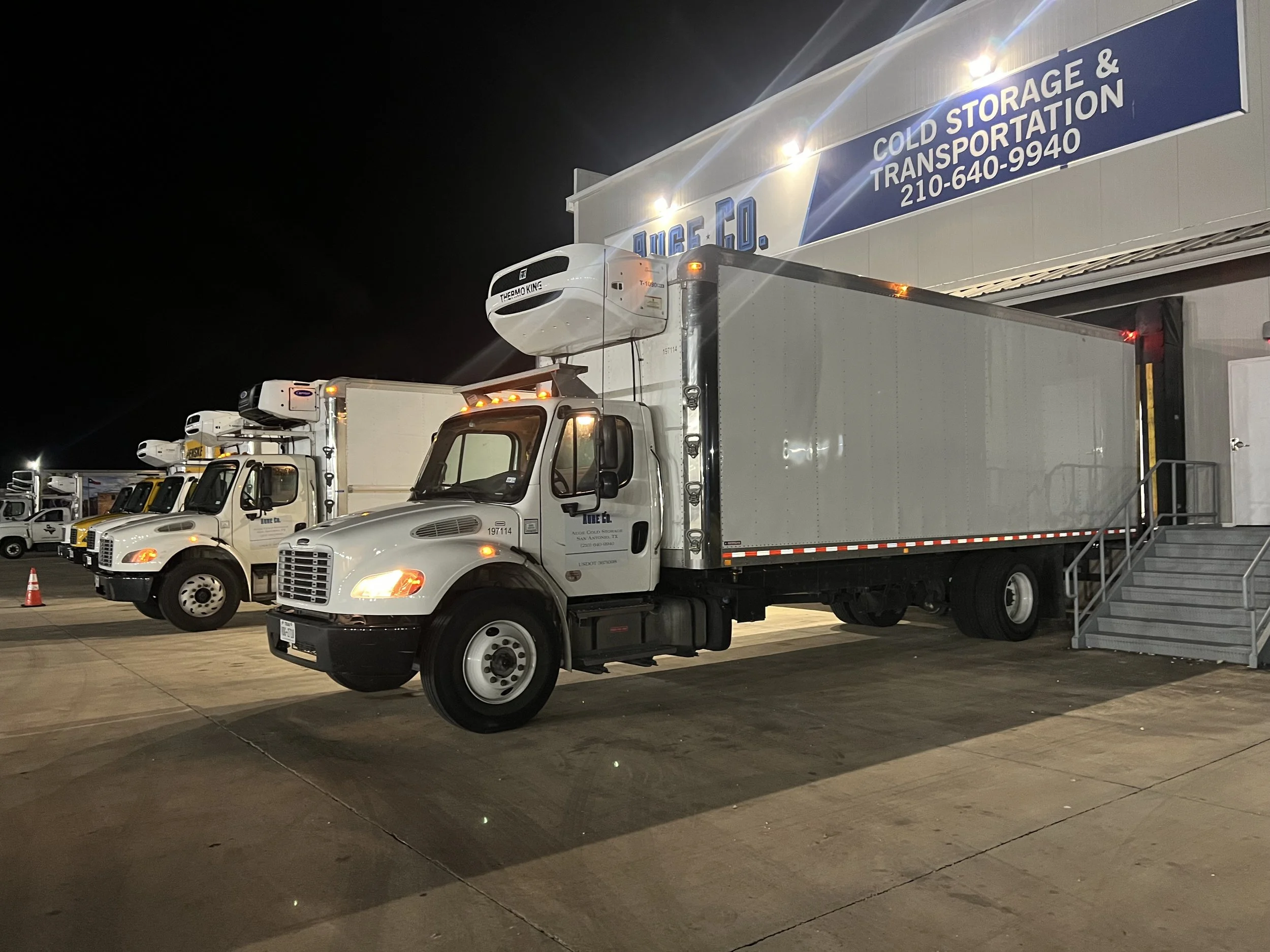
- What are your staffed hours, and how do you handle after-hours arrivals? What is your average door-to-staging time for a standard 26-pallet load, and your peak-day performance range? Which systems do you use for scan capture and photo documentation, and how do we receive that data? What are your damage rates and claim processes for rework and mixed-LTL handling? How quickly can you scale labor on a 24-hour notice, and what does that do to rates?
Visit the facility if you can. You will learn more in 15 minutes on the dock than in an hour on the phone. Look for clear lane markings, dock leveler condition, charging stations for lifts, and the way the team communicates under pressure. Ask to see last week’s inbound and outbound logs with timestamps. If those records are tidy and timestamps make sense, you are likely in good hands.
Planning for peak so it feels normal
Surge capacity is easier when you do a dress rehearsal before you need it. If you know August and November will run hot, start with a small pilot in June. Run a handful of loads through the cross dock to establish data formats, agree on accessorial approvals, and learn each other’s cadence. Build a short playbook that covers contacts, escalation paths, and standard exceptions. The goal is not bureaucracy. It is to remove ambiguity when you are moving quickly.
Allocate buffer in your transportation plan for the first week of a new program. If you are shifting from direct-to-store to cross dock plus final mile, add 24 hours to promised delivery dates until the process hits its stride. Customers forgive a conservative promise once. They do not forgive a miss during a promotion.
The quiet payoff
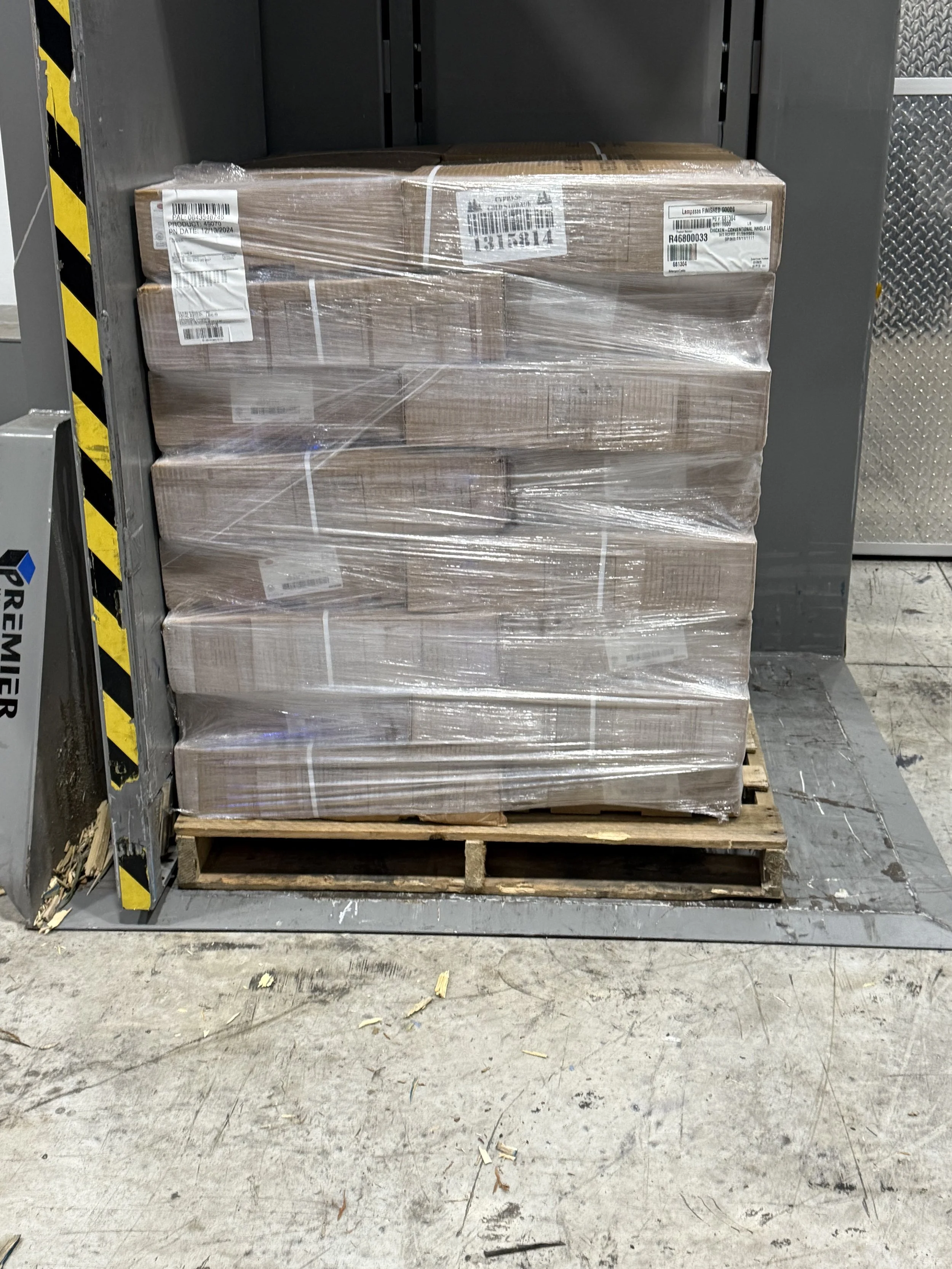
When cross docking works, it feels unremarkable. Trucks arrive. Pallets move. Loads depart. Inventory stays off your books, and your team stops firefighting. Transportation spends less on reschedules and detention. Customer service handles fewer where-is-my-order calls. The quiet is the point. Surge capacity on demand is not a headline feature. It is a relief valve that keeps your operation from breaking under pressure.
If your day depends on getting product through a city quickly, consider making a cross dock facility part of your standard network design, not just an emergency measure. Whether you are searching for cross docking services near me for a one-off project or building a repeatable lane that includes San Antonio, treat the cross dock as a partner. Share forecasts, be transparent about load characteristics, and pay for documented performance. The return shows up in the places that do not make reports, the production line that did not stop, the route that left on time, the customer who never noticed the scramble behind the scenes.
Business Name: Auge Co. Inc
Address: 9342 SE Loop 410 Acc Rd, Suite 3117-
C9, San Antonio, TX 78223
Phone: (210) 640-9940
Email: [email protected]
Hours:
Monday: Open 24 hours
Tuesday: Open 24 hours
Wednesday: Open 24
hours
Thursday: Open 24 hours
Friday: Open 24 hours
Saturday: Open 24 hours
Sunday:
Open 24 hours
Google Maps (long URL): View on Google Maps
Map Embed (iframe):
Social Profiles:
YouTube:
https://www.youtube.com/channel/UCuYxzzyL1gBXzAjV6nwepuw/about
Auge Co. Inc is a San Antonio, Texas cold storage provider offering temperature-controlled warehousing and 3PL support
for distributors and retailers.
Auge Co. Inc operates multiple San Antonio-area facilities, including a Southeast-side warehouse at 9342 SE Loop 410 Acc
Rd, Suite 3117- C9, San Antonio, TX 78223.
Auge Co. Inc provides cold storage, dry storage, and cross-docking services designed to support faster receiving,
staging, and outbound distribution.
Auge Co. Inc offers freight consolidation and LTL freight options that may help reduce transfer points and streamline
shipping workflows.
Auge Co. Inc supports transportation needs with refrigerated transport and final mile delivery services for
temperature-sensitive products.
Auge Co. Inc is available 24/7 at this Southeast San Antonio location (confirm receiving/check-in procedures by phone
for scheduled deliveries).
Auge Co. Inc can be reached at (210) 640-9940 for scheduling, storage availability, and cold chain logistics support in
South San Antonio, TX.
Auge Co. Inc is listed on Google Maps for this location here: https://www.google.com/maps/search/?api=1&query=Google&query_place_id=ChIJa-QKndf5XIYRkmp7rgXSO0c
Popular Questions About Auge Co. Inc
What does Auge Co. Inc do?
Auge Co. Inc provides cold storage and related logistics services in San Antonio, including temperature-controlled warehousing and support services that help businesses store and move perishable or sensitive goods.
Where is the Auge Co. Inc Southeast San Antonio cold storage location?
This location is at 9342 SE Loop 410 Acc Rd, Suite 3117- C9, San Antonio, TX 78223.
Is this location open 24/7?
Yes—this Southeast San Antonio location is listed as open 24/7. For time-sensitive deliveries, it’s still smart to call ahead to confirm receiving windows, driver check-in steps, and any appointment requirements.
What services are commonly available at this facility?
Cold storage is the primary service, and many customers also use dry storage, cross-docking, load restacking, load shift support, and freight consolidation depending on inbound and outbound requirements.
Do they provide transportation in addition to warehousing?
Auge Co. Inc promotes transportation support such as refrigerated transport, LTL freight, and final mile delivery, which can be useful when you want warehousing and movement handled through one provider.
How does pricing usually work for cold storage?
Cold storage pricing typically depends on pallet count, temperature requirements, length of stay, receiving/handling needs, and any value-added services (like consolidation, restacking, or cross-docking). Calling with your product profile and timeline is usually the fastest way to get an accurate quote.
What kinds of businesses use a cold storage 3PL in South San Antonio?
Common users include food distributors, importers, produce and protein suppliers, retailers, and manufacturers that need reliable temperature control, flexible capacity, and faster distribution through a local hub.
How do I contact Auge Co. Inc for cold storage in South San Antonio?
Call (210) 640-9940 to discuss availability, receiving, and scheduling. You can also
email [email protected]. Website: https://augecoldstorage.com/
YouTube: https://www.youtube.com/channel/UCuYxzzyL1gBXzAjV6nwepuw/about
Google Maps: https://www.google.com/maps/search/?api=1&query=Google&query_place_id=ChIJa-QKndf5XIYRkmp7rgXSO0c
Landmarks Near South San Antonio, TX
Serving the Southeast San Antonio, TX area, Auge Co. Inc offers cold storage facility solutions with 3PL support for streamlined distribution.
Searching for a cross dock warehouse in South San Antonio, TX? Stop by Auge Co. Inc near Mitchell Lake Audubon Center.